
ORANGE BEACH — The nine-month moratoriums in Orange Beach recently were extended to allow for additional time to complete the city's comprehensive plan for growth, which is about to enter the …
This item is available in full to subscribers.
Please log in to continue |
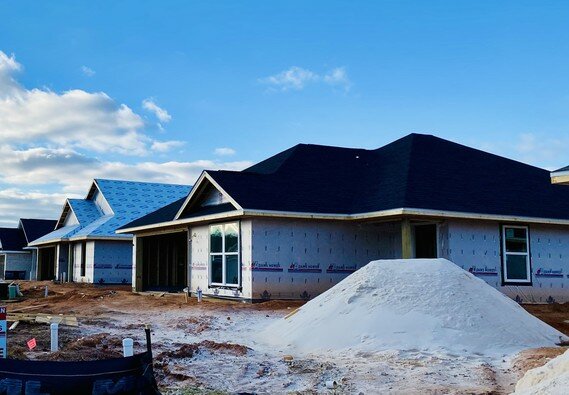
ORANGE BEACH — The nine-month moratoriums in Orange Beach were approved for extension in November 2025 to allow for additional time to complete the city's comprehensive plan for growth, which is about to enter the fourth stage in the process following public input meetings last week.
The comprehensive study focuses on the city's zoning ordinances, infrastructure evaluations and other strategic visioning to be used toward future growth. There are five stages to the plan.
The initial residential moratorium was approved in March last year after the city postponed a vote to deannex some city properties north of the Intracoastal Waterway (ICW), which would have returned them to county jurisdiction.
At a public meeting held Jan. 29, consultants for the project presented conceptual plans in response to resident comment at a workshop event for the project on Jan. 26. Essentially the same 20 residents attended both meetings.
Bob Barber of Orion Planning and Design presented a buildout analysis conducted through the city using current zoning and vacant spaces. The project manager for the comprehensive plan, Philip Walker of The Walker Collaborative, said these projections are based on what could be built based on how undeveloped land is currently zoned. It is not based on demand and is not a prediction for where the city is currently headed, he said.
In a low-growth scenario, which assumes 25% of property zoned for residential is built out and 25% of property zoned for commercial is built out, the city would see an increase of 6,777 dwellings bringing 17,000 new residents and a little over 4.7 million square feet of commercial space.
"If you look at what's below the Intracoastal Waterway and the bay, that 6,800 dwelling units would drop to about 4,500 units," Barber said. "So, there's still, on the island, a tremendous amount of growth capacity."
In a medium-growth scenario, in which residentially and commercially zoned properties see a 50% buildout, 19,064 new housing units would be built, adding 47,000 residents, and a little more than 9.4 million square feet of commercial space would be accessible.
In a high-growth scenario, which is maximum residency determined for the city, 38,128 new homes would be available, allowing for 95,000 residents. A little less than 200,000 square feet of commercial space would be available.
For reference, Barber said the Orange Beach Walmart is about 200,000 square feet.
Orange Beach City Administrator Ford Handley said the ratio on the high-growth scenario differs from the low and medium projections because it reflects the number of residential units across all districts where residential developments are allowed.
In the high-growth scenario, no commercial square footage is projected for construction in mixed-use zones, and residential buildout takes up 100% of the area.
With the current Orange Beach zoning ordinance, a property does not require a specific percentage of mixed-use development.
Although no plans are in place at this time for how the city will develop after the study is complete, the high-growth scenario of residential/commercial rates is possible because of the current zoning ordinance.
"While some districts allow both residential and commercial uses, a project within those districts may be developed as 100% residential or 100% commercial, provided it complies with the zoning regulations," Handley said.
Orange Beach's current population is 8,668, according to U.S. Census data for 2025. That represents 3,216 in total growth since 2010, a 59% population expansion. From 2020-2024, the city's grew by 6.6%.
Countywide, Baldwin County Economic Development numbers show Baldwin is projected to grow by around 30,000 in five year and reach nearly 334,000 by 2037.
Among the 13 other municipalities in the county, Orange Beach ranks sixth in population and growth since 2010. It ranks seventh in percentage of growth since 2010 and 11th in percentage of growth from 2020-2024.
During the public comment period, which was after the hour-long presentation of conceptual ideas for city developments inspired by public requests, a resident asked if the comprehensive plan looked at annexing or deannexing properties to the north of ICW. Walker said the team has not addressed that yet but plans to work on that portion of the plan alongside the city.
A draft plan is set to be presented before city staff by the end of February and after an initial round of editing in a review period, the city will present documents from the plan before the public before holding further public meetings and implementing any recommendations or exploring any of the conceptual projects.
Slides presented at the event are set to be added to the official city website soon. The comprehensive study team has not recommended any rezoning at this time, and nothing has been put in place by the city.
Ahead of the public input meetings, a survey to determine a "blueprint for future growth" was available to Orange Beach residents from September to December last year.
The survey had 843 participants, which according to 2024 U.S. Census data is about 10.2% of the city's population. Walker said he was impressed with the number of responses.
Some of the top priorities from the survey and Jan. 26 workshop participants included protecting the environment; creating more community assets and cultural amenities; balancing tourism and residential needs; creating more housing opportunities; increasing transportation modes or corridors; and limiting and controlling future development within the city.
Bryan Hill, a consultant on the comprehensive project, presented some possible "short-term investments" the city could make to address of these resident priorities.
He suggested an increase in accessibility and encouragement for pedestrians, bicyclists and golf cart users, allowing the city to have non-motorized activity. General connectivity within certain city throughfares was also suggested.
Councilman Jeff Silvers attended the Jan. 29 meeting and said the city is working, or has worked, toward some roadway projects such as the bypass on SR 161 and extending Powerline Road from Canal Road to Perdido Beach Boulevard, which "does have environmental hurdles," Hill said.
Hill said the city is also looking to improve community assets such as the city pool and general recreation facility. A medical facility or general health care services were also recommended for infrastructure improvements.
The school system could see some changes as the city is considering moving sixth grade from the elementary school to the middle school, allowing for more room at the elementary school, and the city is looking at expanding the middle and high school building onto adjacent land.
The main community project recommended was a town center, which would be located on city property surrounding the Coastal Arts Center.
"I love the idea of a town center, it would have a cohesive effect on our community," one of the survey responses read. "I don't think The Wharf, a commercial enterprise, should be the town center, which it has been by default."
Mike Thompson with Thompson Placemaking presented on a conceptual downtown/main street area. To give an idea of how much land is available in the projected town center, he said The Wharf, from the new Portside to the ICW, could fit within the right portion of city property.
As previously reported by GCM in March last year, the city is considering building a new community center facility near the Arts Center campus. Mayor Tony Kennon was quoted saying the considerations were being made to "provide local residents and community their own place."
Other things that could be seen in the town center, according to conceptual projections, include coffee shops or potentially restaurants, a small hotel — aimed at wedding parties and guests for events at the Arts Center — boutiques, protected green spaces and walking trails.
Randy Gross, who works with economic development on the project, said the team also suggested moving the history museum to the area to continue it as a residential-based "civic-cultural node."
He also suggested adding opportunities for economic diversification, allowing the city to not be dependent on tourism revenue. One suggestion was to add surrounding office spaces for remote workers or creative artists.
All plans presented on Jan. 29 are conceptual and based on research by the comprehensive team. Plans are still open to city and public response, and projects are not set to go before council anytime soon. A full comprehensive plan is expected to go before the public after the city receives a draft by March 1.
Editor's note: This article previously stated council action to extend moratoriums was recent, but has since been updated to state action occurred in November last year.


