
Baldwin County's beaches, dunes and coastal waters are home to some of Alabama's most vulnerable wildlife — species that depend on increasingly limited habitat as development continues to expand …
This item is available in full to subscribers.
Please log in to continue |
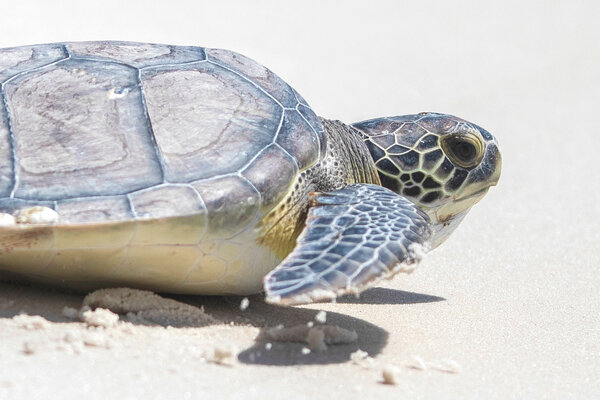


Baldwin County's beaches, dunes and coastal waters are home to some of Alabama's most vulnerable wildlife — species that depend on increasingly limited habitat as development continues to expand along the coast.
From tiny beach mice to migrating shorebirds and massive marine mammals, conservationists say protected land, public education and community awareness are critical to keeping these species from disappearing.
"With all the coastal development we have, there's not too many places where some of these animals have the ability to utilize habitat," said Chandra Wright, director of environmental and educational outreach for Gulf State Park. "That's why it's important that we have Gulf State Park, places like Bon Secour National Wildlife Refuge and other protected areas where animals can breathe, they can feed and forage."
Alabama Beach Mouse
The Alabama beach mouse is federally listed as endangered and is found only in coastal dune systems in Baldwin County. According to the U.S. Fish & Wildlife Service, its remaining suitable habitat is limited to narrow stretches of protected land, including Gulf State Park and Bon Secour National Wildlife Refuge.
"They really don't get outside about a mile radius of their burrows," Wright said. "So they're pretty limited on how far they go, which makes protecting those habitats even more important."
Though small, the beach mouse plays a major ecological role. As it feeds on sea oat seeds, it helps spread vegetation that stabilizes dunes and holds sand in place, making it a keystone species in dune restoration.
Loss of habitat from development and storm damage remains the greatest threat to the mouse, which is federally listed as endangered. Conservation efforts focus on preserving dune systems and limiting disturbance in protected areas.
"They're a keystone species for rebuilding our dunes," Wright said.
Sea Turtles
Several species of sea turtles, including loggerhead and green sea turtles, nest along Baldwin County's beaches. According to NOAA Fisheries, these species are protected under the Endangered Species Act and face threats ranging from habitat loss and artificial lighting to entanglement in fishing gear.
"When the water gets cold, they can become cold-stunned," Wright said. "They become lethargic and may strand on the beach or be seen offshore by boaters."
Alabama's sea turtle stranding network remains active year-round. Anyone who encounters a stranded or distressed turtle is urged to call the Sea Turtle Hotline at 866-SEA-TURTLE.
Education plays a key role in turtle conservation, especially when it comes to fishing-related injuries. Wright emphasized that people should never attempt to remove swallowed hooks.
"If the sea turtle has swallowed the hook, you can't really pull it out without risking serious internal damage," she said.
Shorebirds
Baldwin County's beaches serve as a vital stopover for migratory shorebirds such as the piping plover and red knot, which rely on the coast to rest and refuel during long migrations.
"We're kind of the last stop before they cross the Gulf and the first stop when they fly back north," Wright said. "Having places where they can rest and regroup is important."
Programs like the Alabama Audubon Coastal Bird Stewardship Program work to protect these birds through habitat monitoring, public outreach and volunteer-led surveys. Beginning in January, the program will conduct winter bird surveys and seek volunteers to help identify and count species along the coast.
Gulf Sturgeon
The Gulf sturgeon, a large, long-lived fish native to the Gulf, is listed as threatened under the Endangered Species Act, according to NOAA Fisheries. The species migrates seasonally between freshwater rivers, where it spawns, and coastal and marine waters, where it feeds and grows, making both river systems and nearshore habitats critical to its survival.
NOAA identifies habitat loss, water quality degradation and barriers to river migration as major threats to Gulf sturgeon populations. Because the species relies on connected river and coastal ecosystems throughout its life cycle, conservation efforts focus on protecting water quality, maintaining access to spawning rivers and preserving estuarine habitat along the Gulf Coast.
While Gulf sturgeon are rarely seen by the public, federal agencies have designated critical habitat areas to support recovery of the species, emphasizing the importance of protecting both inland waterways and Alabama's coastal waters.
Manatees
Manatees are not common in Alabama waters but are occasionally sighted, particularly during warmer months. According to the U.S. Fish & Wildlife Service, the West Indian manatee is protected under federal law and is vulnerable to cold stress.
"If they haven't headed south, they could get stranded here because the water temperature could get colder quickly than they realize," Wright said.
Rescue efforts are coordinated through Alabama's manatee stranding network, based on Dauphin Island, and can involve responders from outside the state.
Education as Conservation
With Baldwin County continuing to grow, Wright said education remains one of the most effective conservation tools.
"If people don't know about it, they're not going to care about it," she said.
Gulf State Park offers ongoing educational programs aimed at locals and visitors alike. In January, the park will launch a new adult-focused series called The Science of Nature at the Learning Campus, starting with a beach biology session that introduces participants to coastal ecosystems and citizen science opportunities.
The goal, Wright said, is coexistence.
"We want people to enjoy these beaches and waterways, but at the same time coexisting with our wildlife and knowing how to respond appropriately if something happens," she said.
Gabriella Chavez is a Report for America corps member who writes about growth and development in Baldwin County and our natural spaces for Gulf Coast Media. Your donation to match our RFA grant helps keep her writing stories like this one; please consider making a tax-deductible gift of any amount today by visiting https://tinyurl.com/yaf8yf5n.


