
As winds and currents shift along the Gulf, a familiar — and unwelcome — visitor is making its way back onto Alabama beaches.
Portuguese men o' war, known for their vivid blue-purple floats …
This item is available in full to subscribers.
Please log in to continue |
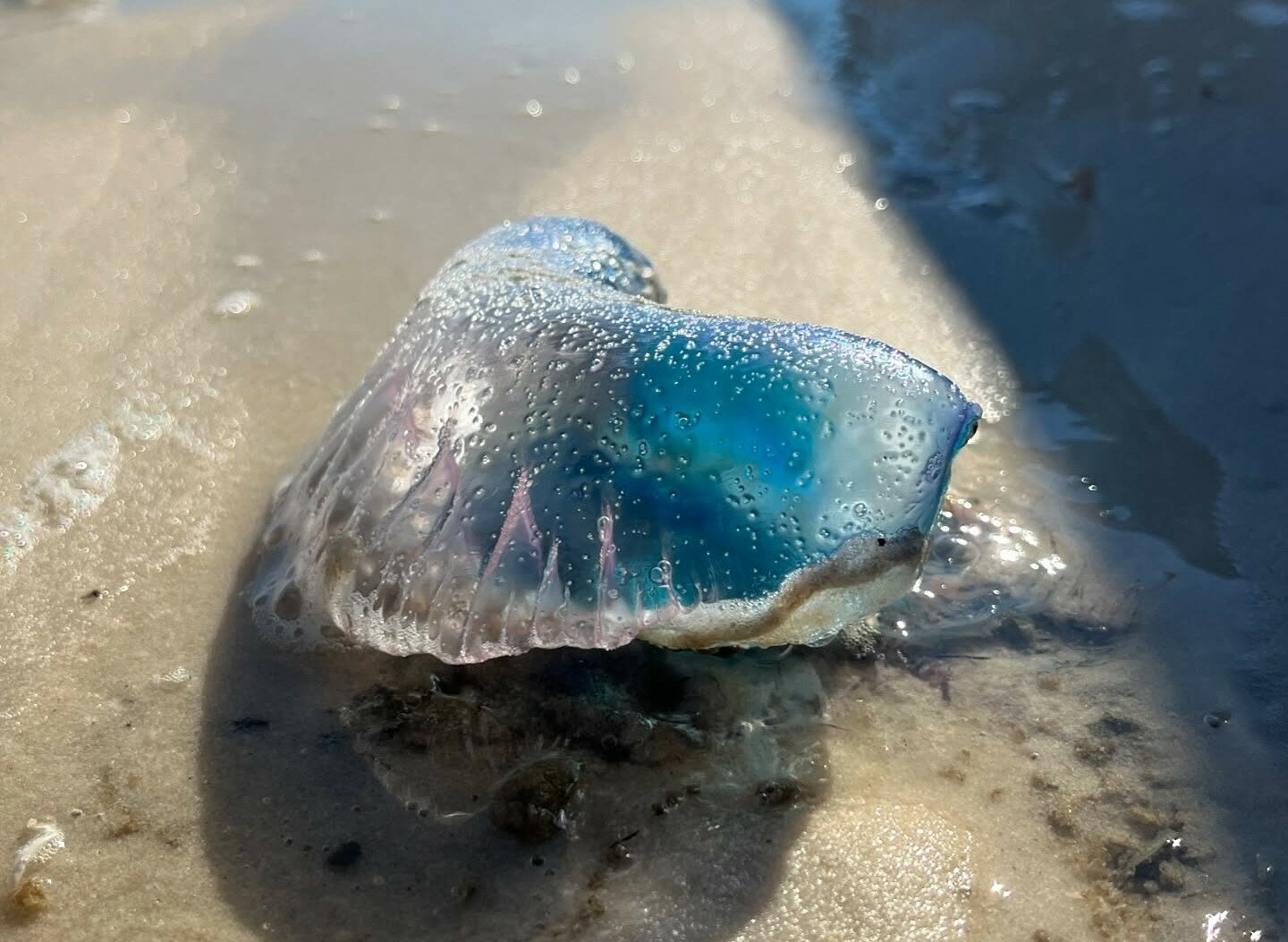
As winds and currents shift along the Gulf, a familiar — and unwelcome — visitor is making its way back onto Alabama beaches.
Portuguese men o' war, known for their vivid blue-purple floats and painful sting, are once again washing ashore along the coast.
"The Portuguese man o' war is a fascinating marine predator that uses a gas-filled float and suspended stinging tentacles to catch small prey items like fish and crustaceans," said Brian D. Jones, curator of the Alabama Aquarium at the Dauphin Island Sea Lab.
Men o' war are actually colonies of specialized organisms working together as one. They drift across the Gulf at the mercy of winds and currents, which occasionally push them onto local beaches. Their arrival often coincides with other offshore species, like blue buttons and floating sargassum.
Though grouped with jellyfish, Jones said the creatures are only distantly related.
"Technically, they are extremely distant cousins, about as closely related to true jellyfish as we are to birds!" he said.
Sightings can happen year-round, but they're most common in the winter and spring, when steady winds and shifting currents help carry them closer to shore. Large groups washing up at once are typically the result of sustained winds rather than strong storms, which can break the delicate animals apart.
While their appearance may be eye-catching, they pose a real risk to beachgoers.
"The man o' war is one of the most dangerous gelatinous organisms in the Gulf," Jones said.
Their long, trailing tentacles, sometimes stretching dozens of feet, are lined with microscopic stinging cells that inject venom on contact. Stings are rarely life-threatening but can be intensely painful.
If stung, Jones recommends carefully removing any visible tentacles and treating the area.
"The recommended first aid is to remove the visible tentacles with tweezers or a plastic card," he said. "The next recommended step is a liberal dousing of the area with vinegar, followed by immersion in hot water to neutralize the toxin."
Beachgoers are urged to stay alert, especially in the water.
"Swimmers should recognize that the tentacles can extend up to 100 feet away from the 'float,'" Jones said. "Thankfully the floats are highly visible, so swimmers can exit the water when the men o' war are present."
Even on shore, caution is key. Though the animal may be dead, it can still sting.
"It's best to admire these unique critters, but not to touch," Jones said.
Even after washing ashore, the animals can still sting, so beachgoers are urged not to touch them.
Officials also recommend watching for purple flags, which indicate the presence of dangerous marine life, and coming prepared with basic first-aid supplies like vinegar.
"Otherwise, people should be alert and enjoy their time on the coast," Jones said.
Gabriella Chavez is a Report for America corps member who writes about growth and development in Baldwin County and our natural spaces for Gulf Coast Media. Your donation to match our RFA grant helps keep her writing stories like this one; please consider making a tax-deductible gift of any amount today by visiting https://tinyurl.com/yaf8yf5n.


