
After over an hour of public comments and then nearly as long of a discussion with Fairhope Public Library leaders, the state library board decided to delay its decision again on whether it will …
This item is available in full to subscribers.
Please log in to continue |
After over an hour of public comments and then nearly as long of a discussion with Fairhope Public Library leaders, the state library board decided to delay its decision again on whether it will restore funding to the local library.
The Fairhope library has not received state funding since March over alleged violations of the Alabama Public Library Services (APLS) board's new policy regarding books available to children and teens. The policy says inappropriate and sexually explicit material cannot be available in sections for minors.
A group of parents challenged 14 books that they brought to the former library director's attention, then to Fairhope City Council before asking the state board to step in. The Fairhope board has been reviewing the books this summer and finished in August. They voted to move seven books to the adult section. According to previous reporting by GCM, Library Director Rob Gourlay told the state board in May that six to seven people have made all the requests for reconsideration of Fairhope's 20,000-plus library card holders.
Now, the nonpartisan state board decided in a 4-1 vote last week during its monthly public meeting to delay their decision on the local library's funding again after doing so in July so they can have more time to review the books being challenged locally. Fairhope was the first public library in the state to see its state funding paused over the new policy and receives around $42,000 annually in state monies, while the city provides most of its budget of around $1 million. An online fundraiser this spring raised around $46,000 in two weeks to supplement the lost revenue.
Many of the challenged books discuss themes of race and identity, abuse and exploitation or include characters in the LGBTQ+ community.
"In making these decisions, we gave a great deal of thought to adolescent development," said Randal Wright, Fairhope Public Library Board of Trustees chair. "Teen years are a time of exploring one's place in the world. Literature can be a mirror that will affirm their self-worth and show them they are not alone. It can also be a window into the lives of others, fostering empathy and understanding for diverse populations. Reading fiction is a safe, credible way for young people to explore difficult issues such as mental health, bullying, abuse."
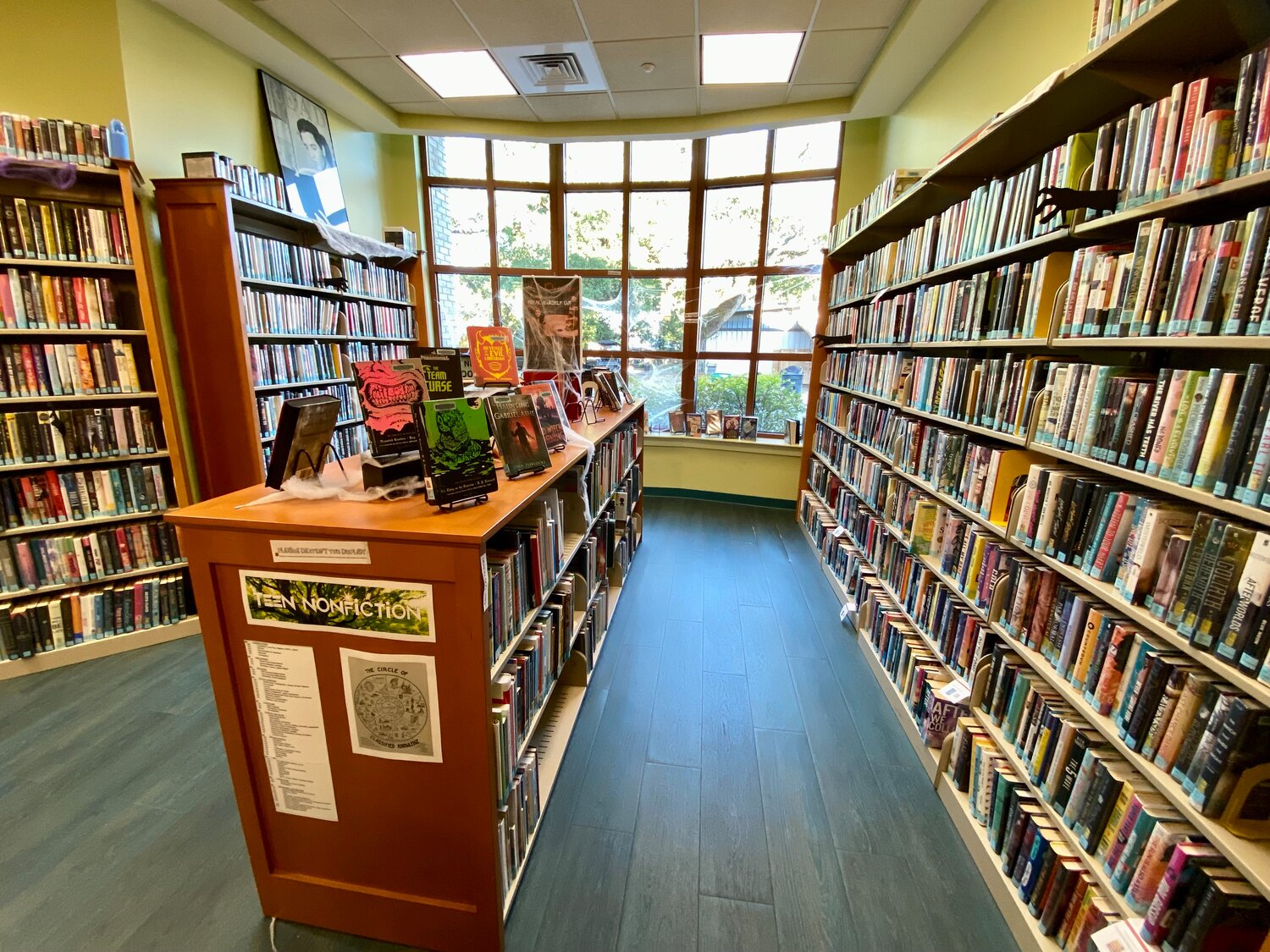
Wright asked the state board if there are specific titles they want Fairhope to move since "most of these titles can be found on the shelves and the youth departments across the state," later noting, however, that Fairhope has tiered sections for patrons under 18, offering a teen section, juvenile section and pre-school area. She said none of the challenged books are available to anyone younger than a teenager and that the library has, since the new policy, created a tiered system for library cards. Parents must approve their children's library card and choose whether to give them all-access or restricted.
APLS Chairman John Wahl, who also is chairman of the Alabama Republican Party, said there is no statewide list and that the policy should address the content of a book, not the title.
"If there's not a list of books, how do we know what to do to be compliant?" asked Rob Gourlay, Fairhope library director.
"Obviously, there's a difference of opinion, so go back to the definitions of obscene and sexually explicit," Wahl responded.
When asked "why was Fairhope singled out," Wahl said it was brought to the state board's attention that the Fairhope board "refused" or "ignored" parents' complaints over books. Wright responded by saying the first complaints they filed for consideration were before the policy change and that it's library policy to let a decision stand for five years. However, they did re-review those books after the funding pause.
Later, Wahl would ask for a list of the books that were challenged and information on what the local board's conclusion on each was.
Gourlay said, "You all have had information about our library for months. I thought you'd know more about our titles."
Wright said six of Fairhope's librarians have master's degrees in library information and science.
"If we can't trust them to run our local library, I don't understand. We've done what you asked us to do, and we've moved the books we thought were not inappropriate," she said.
A misalignment on the interpretation of the definition in the code was echoed in public comments, which took the first hour of the meeting in a larger room where people spoke on both sides of the argument for or against certain books.
During the second hour of the meeting, which was streamed to those in the public room as well as online, Wright said the definition of explicit or obscene cannot be enforced uniformly objectively because "what my background, culture, experiences are determine how I feel about that term. And yours could be entirely different than mine."
Wahl ended the discussion by asking for the list of challenged books to "have more time to look at the books."
"It's not our responsibility to go through books. We'd be becoming a board of censorship," said Ronald Snider, District 1 state board representative.
The seven-member, governor-appointed state library board voted 4-1 to delay a decision on the Fairhope library's funding, with Snider first making a motion to restore funding, which died without a second, then making the lone dissent.


