
GULF SHORES — A presentation at the Gulf State Park Learning Campus last week showed blooming iris fields, carnivorous plants, migratory birds and native fish species, all of which help make …
This item is available in full to subscribers.
Please log in to continue |

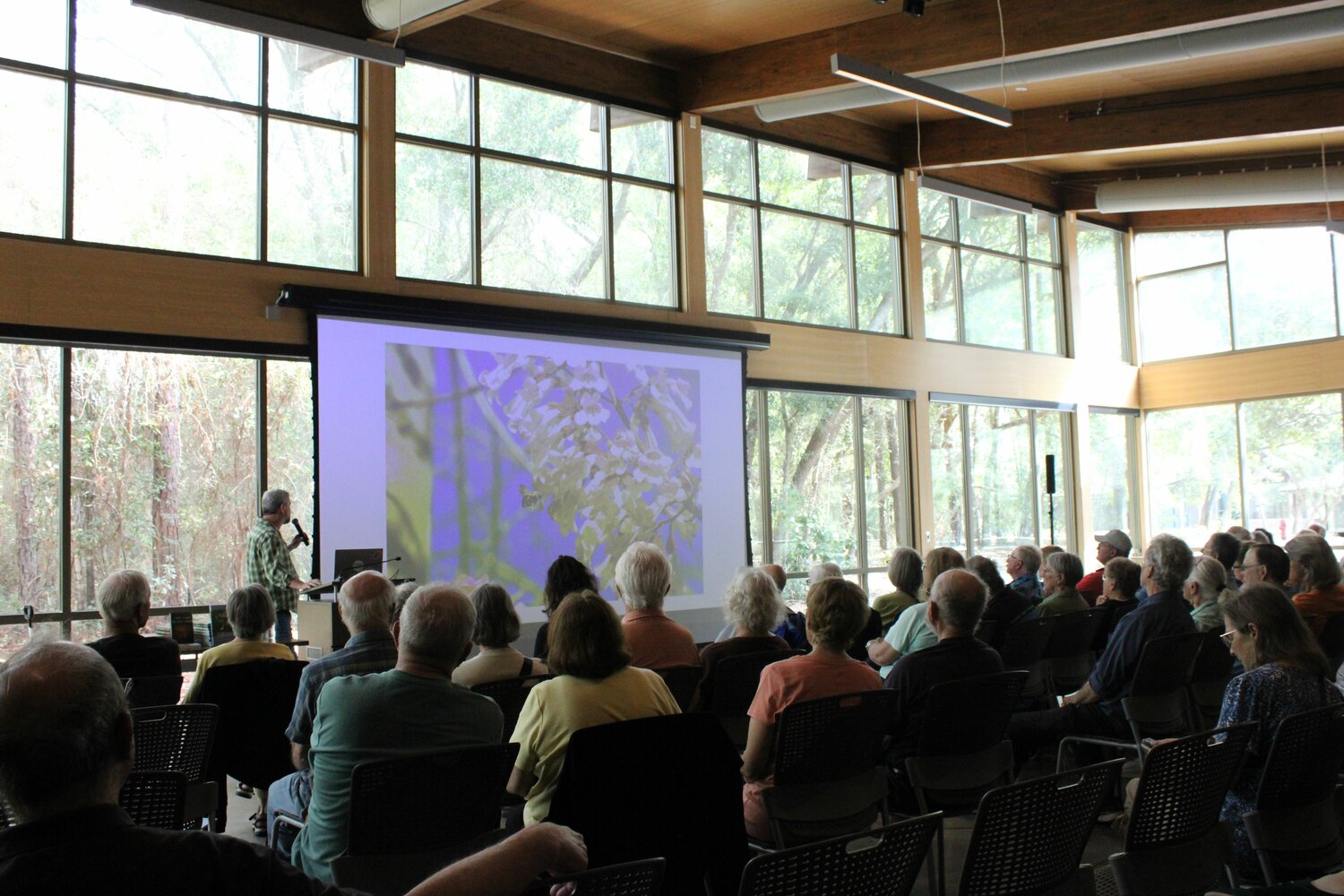


GULF SHORES — A presentation at the Gulf State Park Learning Campus last week showed blooming iris fields, carnivorous plants, migratory birds and native fish species, all of which help make Alabama one of the most ecologically rich areas in North America.
"You are in the state with more species per square mile of plants and animals than any other state," explained Ben Raines, an environmental journalist who led the presentation on Feb. 20 as part of the 2026 Winter Showcase Series presented by Gulf Shores & Orange Beach Tourism, emphasizing the importance of recognizing and protecting Alabama's biodiversity.
Raines' presentation, titled "A Celebration of Alabama's Biodiversity and a Prescription for How to Protect It," focused on the state's extraordinary ecosystems and the need for greater public awareness.
"I think, so often we can fail to appreciate this landscape around us," Raines said. "We see these other places in America, in the world, without realizing we're in one of the most biologically diverse places on earth."
Using photos and videos from years of exploring coastal waterways, forests and wetlands, he highlighted species and habitats found across the region, particularly those connected to the Mobile-Tensaw Delta.
Raines also addressed how Alabama's natural environment is often overlooked.
"The problem in Alabama is that we see ourselves the way the nation at large sees us," he said, explaining that many people associate the state with industry and history rather than its landscape.
"Seeing how little I knew when I got here about what was here, and then seeing how little people knew about what was here, I wanted to inspire them to care about it, to see it with different eyes," he said.
Raines said protecting biodiversity is urgent.
"We still have it," he said. "The biodiversity hasn't been lost yet. And so this is the moment. Every day we wait, a little more is lost."
Educational programs like those at Gulf State Park help raise awareness about the issue, according to Chandra Wright, the park's director of environmental and educational outreach.
"I think part of what we do is having educational programs like this to let people know why it's important to protect our biodiversity here," Wright said. "A lot of people don't realize how special Alabama is because of all that biodiversity."
She said the goal is to show people what exists in the state and how they can help protect it.
"Just letting people know what is here, how special it is, why it's special, and then how people can help us protect it," Wright said.
Raines said he hopes people leave with a better understanding of the state's natural importance.
"This is one of the most diverse states in America," he said, "and that deserves to be protected."
Gabriella Chavez is a Report for America corps member who writes about growth and development in Baldwin County and our natural spaces for Gulf Coast Media. Your donation to match our RFA grant helps keep her writing stories like this one; please consider making a tax-deductible gift of any amount today by visiting https://tinyurl.com/yaf8yf5n.


