
U.S. fishermen may soon gain a new edge in the fight against black market seafood imports, thanks to legislation led by Alabama Sen. Tommy Tuberville and Texas Sen. Ted Cruz.
Last week, the U.S. …
This item is available in full to subscribers.
Please log in to continue |
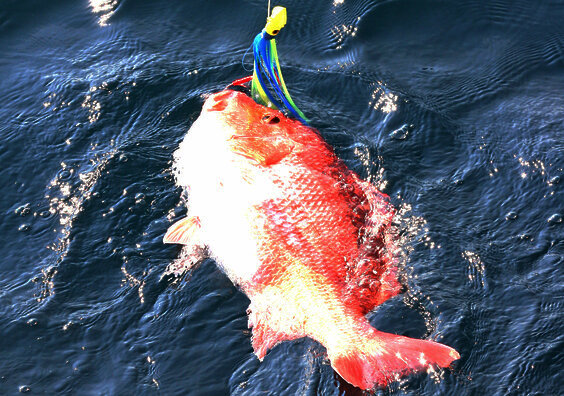
U.S. fishermen may soon gain a new edge in the fight against black market seafood imports, thanks to legislation led by Alabama Sen. Tommy Tuberville and Texas Sen. Ted Cruz.
Last week, the U.S. Senate passed the Illegal Red Snapper and Tuna Enforcement Act, targeting cartels that smuggle fish into the country and threaten legal fisheries across the Gulf Coast.
“This is great news for our hardworking fishermen who have worked overtime to compete with Mexican cartels flooding our markets with illegal red snapper,” Tuberville said in a news release. “It’s also a win for every American because it cuts off the cash flow to cartels, which have been terrorizing our communities. I’ll continue standing up for our fishermen and fighting to preserve the outdoor activities Alabamians enjoy.”
Per the release, Alabama alone accounts for 34% of all recreational red snapper caught in the Gulf of Mexico, making the state's coastal communities especially vulnerable to the impacts of illegal fishing.
The legislation directs the National Institute of Standards and Technology (NIST) and the National Oceanic and Atmospheric Administration (NOAA) to develop a standardized method to determine the country of origin of imported red snapper and tuna. While chemical testing technology already exists for products like beef, honey and rice, it currently does not exist for red snapper or tuna. Scientists believe it’s possible to create such tools using machine learning and existing food tracing methodologies.
According to the release, Mexican fishing boats, known as “lanchas,” frequently cross into U.S. waters off the coast of Texas to poach red snapper. Once caught, the fish are smuggled back to Mexico and either sold there or mixed with legally harvested red snapper and re-exported across land borders into the U.S. The result is an undercutting of law-abiding American fishermen and a distorted seafood market that gives unfair advantage to foreign criminals.
Illegal, Unreported and Unregulated (IUU) fishing activity is already prohibited under U.S. and international law, but enforcement is often difficult. The proposed legislation would create a field test kit that the U.S. Coast Guard and law enforcement could use to verify whether fish were caught in U.S. or Mexican waters. This would allow officials to seize illegally harvested fish before it re-enters American markets and reduce profits from the illicit trade.
In many cases, the same boats used to smuggle red snapper are also tied to drug trafficking and human smuggling the release said. The profits from illegally harvested fish often help finance criminal cartel operations that extend far beyond the Gulf Coast.
By cutting into these profits and giving U.S. authorities more enforcement tools, supporters of the bill hope to weaken cartel influence in coastal waters and restore balance to a strained seafood economy.
Full text of the bill is available at www.congress.gov/bill/119th-congress/senate-bill/283/text.


