
State Rep. Chip Brown, R-105, has filed legislation aimed at strengthening enforcement of Alabama's seafood labeling law and increasing penalties for restaurants that fail to comply.
Brown, …
This item is available in full to subscribers.
Please log in to continue |
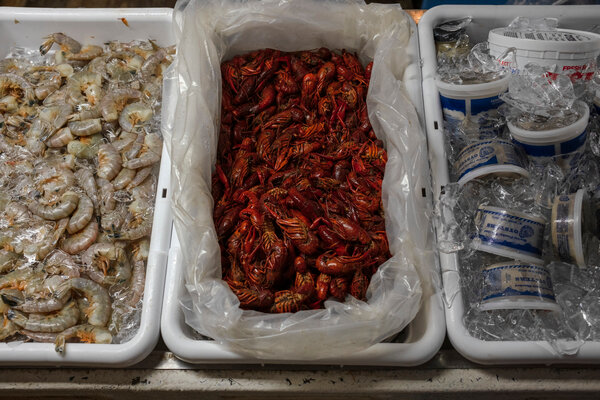
State Rep. Chip Brown, R-105, has filed legislation aimed at strengthening enforcement of Alabama's seafood labeling law and increasing penalties for restaurants that fail to comply.
Brown, whose district covers Grand Bay, St. Elmo, Irvington, Theodore, Hollingers Island, Mon Louis Island, Dog River, Fowl River and Coden along with the Town of Dauphin Island and the City of Bayou La Batre, said the bill is intended to close loopholes and improve transparency for consumers.
"Our current labeling law is designed to inform consumers and encourage restaurants to use seafood products harvested in Alabama, but too many owners are exploiting loopholes or simply refusing to follow its requirements," Brown said. "This legislation adds sharp teeth to the statute and includes strong penalties for restaurants that continue thumbing their noses at state law."
Alabama restaurants are currently required to disclose whether seafood is domestic or imported, as well as whether fish and shrimp are farm-raised or wild-caught, either on menus or on clearly visible signage.
Although civil penalties can be assessed by the Alabama Department of Public Health, Brown said some restaurants are ignoring the law or taking advantage of perceived loopholes.
House Bill 444 would introduce several enforcement measures, including automatic five-point deductions from a restaurant's publicly posted sanitation score for violations. The bill would also authorize the Alabama Department of Agriculture and Industries to genetically test seafood products to verify their origin.
In addition, the legislation would eliminate signage as an option for country-of-origin disclosure and require labeling directly on menus. It would mandate regular inspections focused on seafood labeling compliance and require public posting of the names and addresses of restaurants found in violation.
The bill would take effect Oct. 1 if enacted. As of Feb. 12, it has been referred to the House Health Committee.
Alabama's current seafood labeling law was passed in 2024 — unanimously and also sponsored by Brown — following a case in Mississippi in which a restaurant pleaded guilty to selling imported frozen fish marketed as fresh Gulf seafood.
Gabriella Chavez is a Report for America corps member who writes about growth and development in Baldwin County and our natural spaces for Gulf Coast Media. Your donation to match our RFA grant helps keep her writing stories like this one; please consider making a tax-deductible gift of any amount today by visiting https://tinyurl.com/yaf8yf5n.


