
ORANGE BEACH — Sitting along Alabama's coastline, the Orange Beach Wildlife Center serves as a rehabilitation facility for injured, orphaned and sick native wildlife, caring for animals whose lives …
This item is available in full to subscribers.
Please log in to continue |


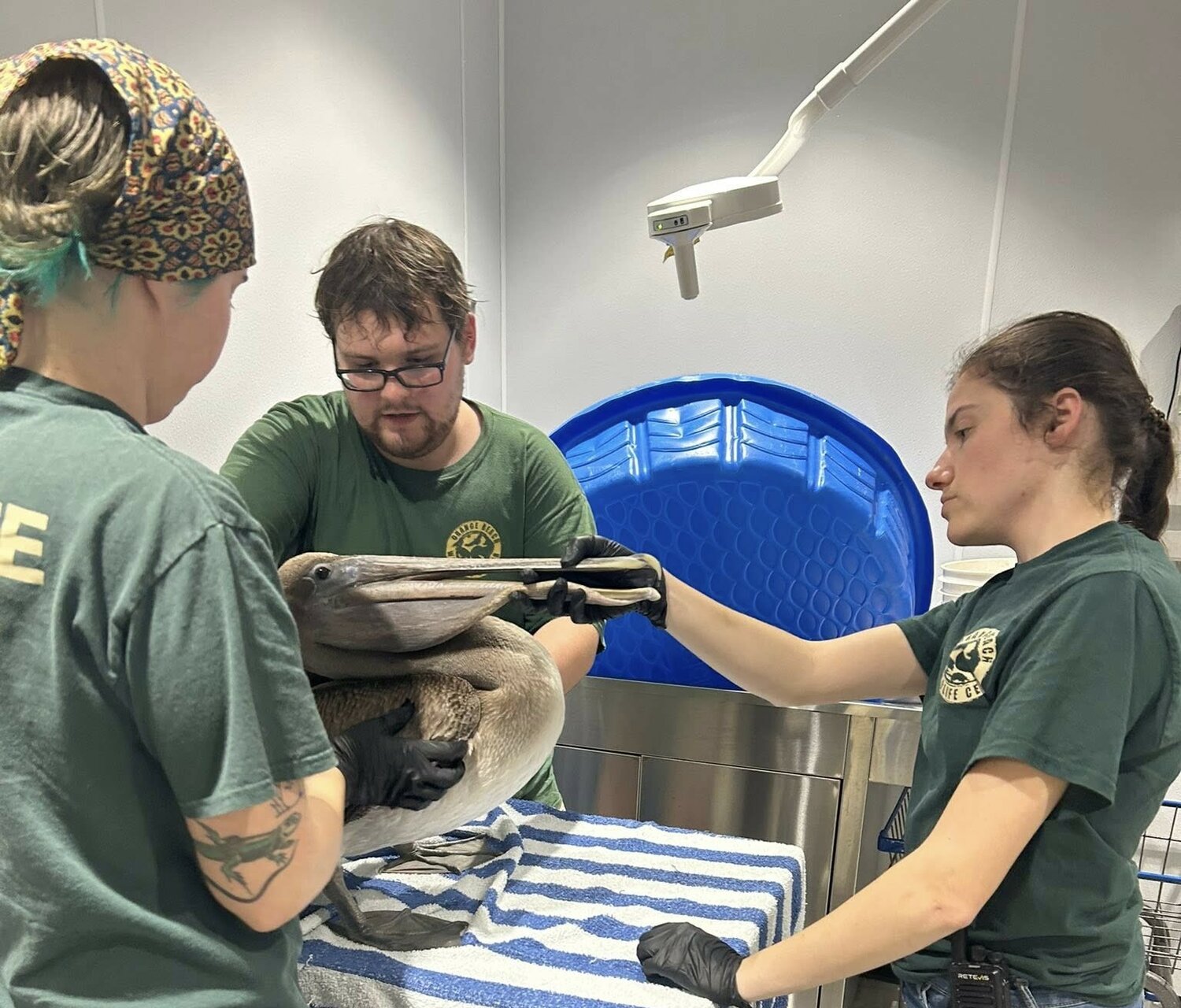


ORANGE BEACH — Sitting along Alabama's coastline, the Orange Beach Wildlife Center serves as a rehabilitation facility for injured, orphaned and sick native wildlife, caring for animals whose lives are shaped by both the Gulf and the people who flock to it.
The center treats a wide range of species throughout the year, with a significant portion of its admissions made up of shorebirds, seabirds and waterfowl. Brown pelicans, great blue herons, laughing gulls and ospreys are among the most commonly admitted aquatic birds, according to staff. Many of those cases are tied to fishing line entanglement, hook ingestion, vehicle strikes or young birds that fail to thrive.
Wildlife Specialist II Andrew Baughman said early assessment can often mean the difference between an animal being reunited with its parents or unnecessarily brought into care.
"A lot of those times, we can either re-nest them or reunite them in the moment," Baughman said.
When animals do need help, the center is prepared to take in nearly all native wildlife species in Alabama. Staff are not permitted to rehabilitate rabies vector species such as raccoons, skunks, foxes, coyotes or bats, nor do they handle alligators or venomous snakes, but otherwise care for a wide range of birds, mammals and reptiles.
The facility operates as part of the City of Orange Beach and responds directly to calls within city limits while also admitting animals from surrounding areas. Wildlife Specialist I Brendan Paquin said staff often rely on photos, background information and coordination with other agencies to determine whether an animal needs rehabilitation.
"We try to get as much information as possible before making that call," Paquin said.
Behind this work is a small but highly active team. The center employs four staff members along with a rotating group of paid interns who live on site and provide coverage from morning through evening every day of the year. Last year alone, the facility admitted more than 800 animals, including 190 eastern gray squirrels — a notable number given that only two licensed squirrel rehabilitators operate statewide.
"These guys are the force behind this mission," Baughman said of the interns.
The type of animals admitted, and the level of care they require, shifts with the seasons. During the summer, adult birds injured by recreational activity are more common, particularly those harmed by fishing gear. Pelicans, herons and ospreys are frequently hooked while attempting to steal bait or fish or become entangled in discarded lines left behind on piers and shorelines.
"Tons and tons of fishing line," Baughman said. "We see those types of injuries all the time."
Paquin said the center then sees different challenges in the winter.
"Over the winter, we get a lot more animals that require an elongated process. Over the summer, we usually have a quicker intake to release process compared to the winter," he said. "It's a lot more animals where we're feeding them and getting them out and then three, sometimes four times a day."
This winter, the Orange Beach Wildlife Center has seen more animals brought in compared with last year, a trend attributed to growing awareness of the center's work.
"There are a lot more injured animals out there than we get in. The way we get them is by people finding them and hopefully contacting us and getting them to us," Paquin said.
He noted that pelicans and herons were among the top species seen in 2025 and expects the center will continue seeing more animals from surrounding cities as education about the facility and its services reaches more people.
"We just want to spread the word about us as much as possible, so that people know that we're someone they can call and we are who they can get the animal to as that's what's best for the animal," he said.
Winter brings juvenile birds experiencing their first cold season, often arriving emaciated and struggling to find food as fish move into deeper water. Brown pelicans, northern gannets and loons are among the most frequent winter admissions, many suffering from advanced starvation and heavy parasite loads.
Rehabilitating those birds is a slow, carefully managed process. Animals must first be stabilized and hydrated before food is gradually reintroduced, along with treatment for parasites and infections. Feather damage can extend recovery even further, sometimes keeping birds in care for months.
"If you damage those feathers at all, it's done for until it grows back," Baughman said.
Because seabirds and shorebirds are often considered indicators of ecosystem health, the injuries staff see typically reflect ongoing human activity rather than sudden environmental concerns. While large-scale events such as pollution spills would be immediately evident, many of the injuries they treat are preventable, Baughman said.
"I think that's a matter of education," he said.
WHAT TO DO AFTER SPOTTING AN INJURED ANIMAL
One of the most common messages staff share with the public is to not feed wildlife. Feeding birds encourages them to associate people with food, increasing the risk of hook injuries, entanglement and vehicle strikes.
"Once they start eating from us and learning that we mean food, they keep coming back," Baughman said.
Paquin emphasized the importance of outreach and ensuring animals are properly cared for once they arrive at the center.
"It essentially depends on how much people know about us and getting the word about what we do and what we can do for them out there," he said.
When someone encounters an injured animal, staff recommend calling the center first, placing the animal in a dark, quiet space and avoiding food or water unless instructed otherwise.
"We're always happy to walk someone through a situation," Baughman said.
Baughman said the center also hosts educational programs for school groups and the public at its outdoor classroom, using non-releasable birds to teach about native wildlife, proper habitat care and the risks birds face along the Gulf Coast.
Through rehabilitation, education and daily hands-on care, staff at the Orange Beach Wildlife Center say their goal remains the same: to give native wildlife the best chance possible to return to the wild and, when possible, prevent injuries before they happen.
Gabriella Chavez is a Report for America corps member who writes about growth and development in Baldwin County and our natural spaces for Gulf Coast Media. Your donation to match our RFA grant helps keep her writing stories like this one; please consider making a tax-deductible gift of any amount today by visiting https://tinyurl.com/yaf8yf5n.


