
The U.S. Army Corps of Engineers has denied requests for public hearings on its proposal to continue placing dredged sediment in Mobile Bay, rejecting calls from coastal organizations and the public …
This item is available in full to subscribers.
Please log in to continue |
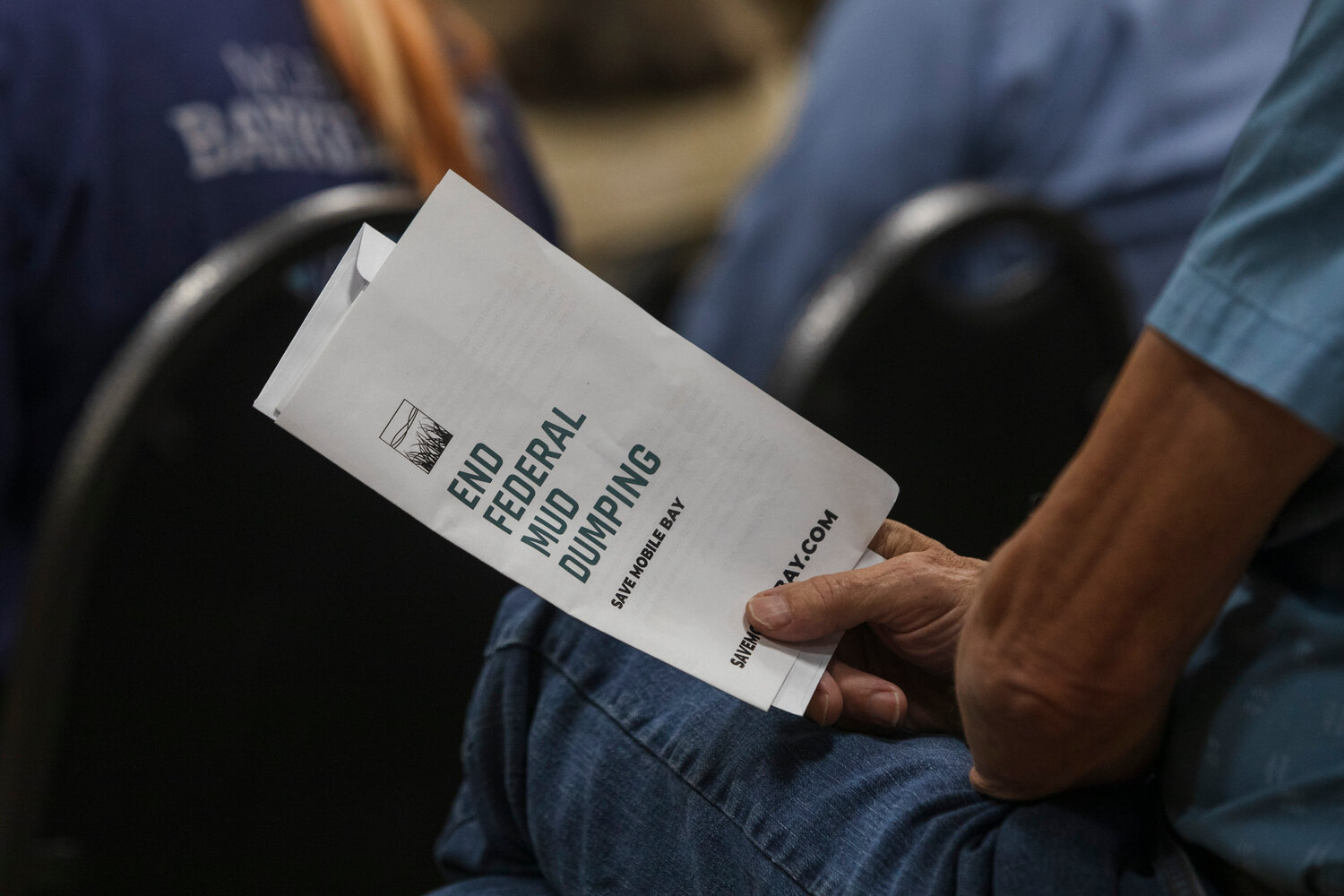
The U.S. Army Corps of Engineers has denied requests for public hearings on its proposal to continue placing dredged sediment in Mobile Bay, rejecting calls from coastal organizations and the public for an opportunity to question the agency about its plans.
The dispute centers on how the Corps will dispose of sediment removed from the Mobile Harbor navigation channel. The practice, commonly referred to as "mud dumping," involves placing dredged material into the open waters of Mobile Bay. One method under consideration is thin-layer placement, in which dredged sediment is spread in relatively thin layers in open water.
The Corps is considering disposal methods as part of its long-term plans to operate and maintain the Mobile Harbor navigation channel. According to environmental advocacy nonprofit Mobile Baykeeper, those plans could result in approximately 90 million cubic yards of sediment being placed in Mobile Bay over the next 20 years.
Several coastal organizations asked the Corps for public hearings as part of the review process, including Baykeeper, the Little Lagoon Preservation Society, Bama Bay Oyster Farm, Alabama Commercial Fishermen's Association and Mobile Environmental Justice Action Coalition.
The organizations' concerns were addressed by the Corps on the same grounds, according to the groups. In a July 30 letter to several community organizations, Mobile District Commander Col. Kelcey R. Shaw said the Corps reviewed the hearing requests and written comments but determined they did not identify new factual issues, materially different information or unresolved matters outside the existing written record.
Baykeeper submitted 86 pages of technical comments in July opposing open-water, thin-layer placement as a potential method for disposing of material dredged from the Mobile Harbor navigation channel. The organization said its comments were addressed in the same half-page letter denying its request for a public hearing.
"Decisions that could affect Mobile Bay, our fisheries and our coastal communities for decades should not be made without giving the public an opportunity to ask questions and hear the Corps' answers on the record," said William Strickland, executive director of Mobile Baykeeper.
Strickland said the Corps previously encouraged Baykeeper to involve the public in the
comment process.
"I am unsure what the Corps is thinking here," Strickland said. "They requested that Baykeeper get the public involved in this comment period to review the damage done by mud dumping in Mobile Bay."
Dennis Hatfield, president of the Little Lagoon Preservation Society in Gulf Shores, also requested a public hearing after Strickland asked his organization and the public to become involved.
"We hoped that there would be a public hearing somewhere in Baldwin County, and that hearing would allow elected officials, local governments, fishing communities, recreational users, conservationists and other stakeholders to present our interests directly and make it part of the record," Hatfield said.
Hatfield, who has a background in coastal sedimentary geology, said he particularly wanted to question the Corps' characterization of thin-layer placement as a beneficial use of dredged material.
"Our board is unanimously opposed to thin layer placement as a disposal method, and we want to see beneficial use versus thin layer placement," Hatfield said.
The Corps has described thin-layer placement as a beneficial use because the sediment dredged from the navigation channel originally entered Mobile Bay through natural river systems. Hatfield disputed that reasoning, saying placing fine-grained clay back into the water column can increase turbidity.
"The whole idea of taking sediment that has been deposited by nature and dredging it up and putting it back into the water column is creating more turbidity than nature would have created," Hatfield said.
The proposed disposal practices are also drawing attention because of Alabama House Bill 181, which establishes requirements for the beneficial use of dredged material.
Under the law, at least 70% of qualifying dredged material is required to be put to beneficial use. The law identifies uses such as habitat development, shoreline restoration and marsh creation. It also distinguishes beneficial use from depositing dredged material into public waters unless the deposition is part of a shoreline restoration or marsh-creation project.
Hatfield said the Little Lagoon Preservation Society believes thin-layer placement should be a secondary option rather than one of the Corps' primary disposal methods.
"The main issue we raised in [the letter] was the Alabama law passing legislation directing the operations to be used beneficially for shoreline restoration. Those types of projects, rather than being disposed of in the open waters of Mobile Bay, and it seems like the Corps is ignoring that," Hatfield said.
Hatfield said the society's interpretation of the law was that thin-layer placement should be a last alternative rather than one of the Corps' primary disposal methods.
"So our understanding of that law was thin layer placement was kind of the last alternative, and it seems like the core is bumping that up to one of the top uses, so we don't agree with them that that's a beneficial use," he said.
More than 35,000 emails have been sent, along with scores of phone calls, from groups and individuals urging Alabama's federal delegation to include language in the Water and Development Resources Act of 2026 that would prohibit the disposal of dredged material in the bay, according to Baykeeper.
Gabriella Chavez is a Report for America corps member who writes about growth and development in Baldwin County and our natural spaces for Gulf Coast Media. Your donation to match our RFA grant helps keep her writing stories like this one; please consider making a tax-deductible gift of any amount today.


