

You wear your new glasses for the first time, but something feels off. The edges of the room curve slightly, straight lines look tilted, and a dull headache begins to develop. It's natural to think that something isn’t right with your prescription, but in most cases, what you're experiencing is completely normal.
Mild visual changes and discomfort are often part of adjusting to new glasses. These symptoms are temporary for many people. Whether you're wearing glasses for the first time or switching to a new prescription, your brain needs time to adapt to clearer visuals.
This guide from Eyemart Express helps you understand common adjustment symptoms, expected timelines and signs you should follow up with your eye care provider.
These takeaways can help you set expectations for the adjustment period:
Many people adjust to new glasses within a few days to two weeks. However, the exact timeline depends on whether you’ve previously worn glasses, your prescription and lens type.
During the first day, you may notice mild distortion, tilted lines, headaches, dizziness or unusual peripheral vision. These symptoms can occur as your brain learns to interpret the clearer visual information your new lenses provide.
Within the first week, symptoms should start to become less noticeable, particularly if you consistently wear your glasses. Stronger prescriptions, bifocals, astigmatism correction and progressive lenses can take longer to feel natural.
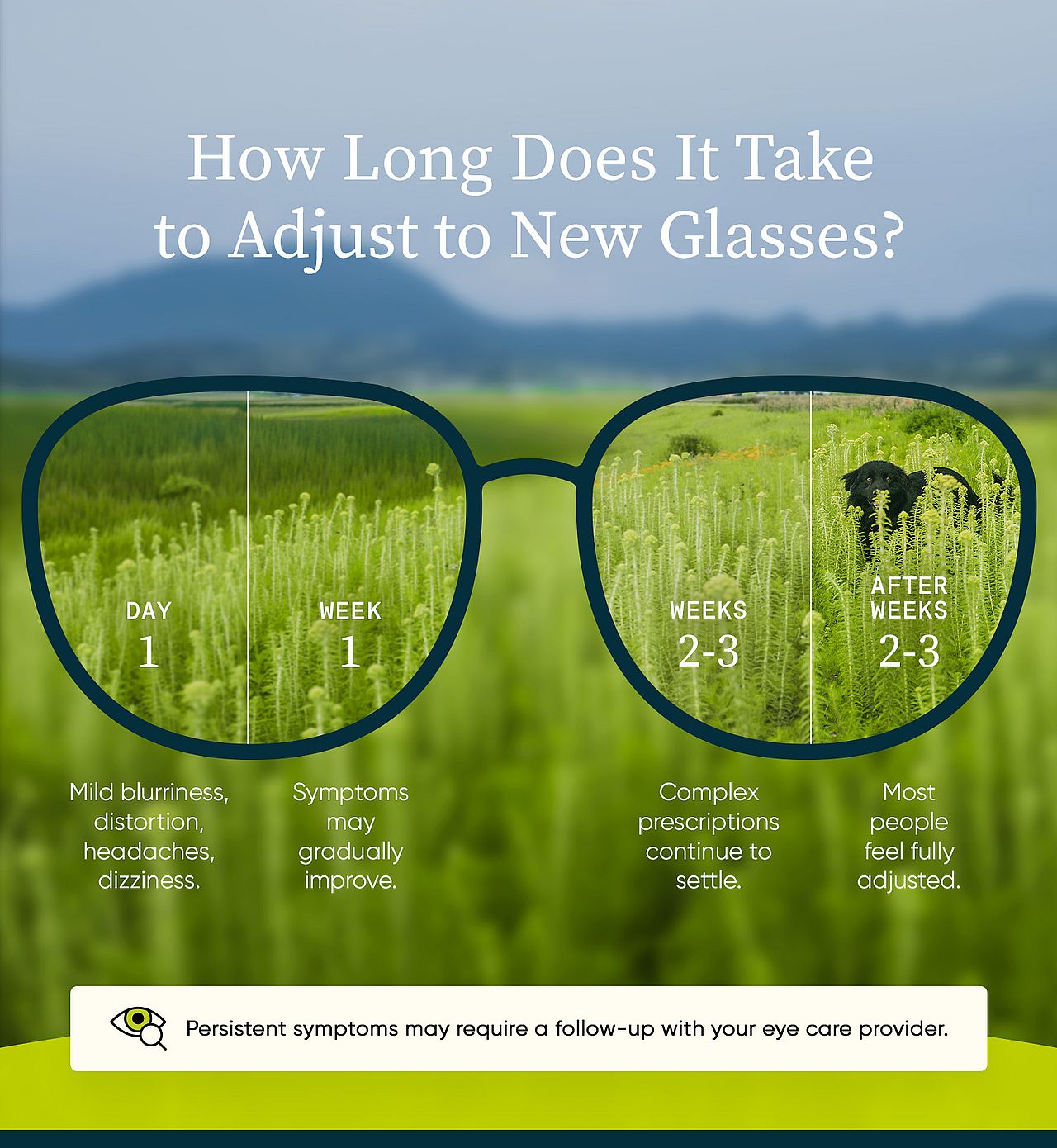
Here's what you can typically expect within the first couple of weeks:
Follow up with an eye care provider if significant discomfort continues beyond the normal adjustment window.
Yes, it is normal to have a hard time adjusting to new glasses, especially during the first few days. The key is steady improvement. Symptoms should become less noticeable over time and likely won't disappear immediately.
First-time glasses wearers may need a little longer to adjust because the frames, lenses and corrected vision all feel new at once. You may notice the frame edges in your vision, feel more tired with screen use or find brighter spaces more intense than usual.
These symptoms usually fade as your brain adjusts to the frames and corrected vision. Wearing your glasses consistently during the first two weeks can help make the adjustment smoother. Activities such as reading or using a computer may feel slightly different at first, but they generally become more comfortable as your brain adapts.
New glasses change the visual information reaching your brain, so mild symptoms are common during the first few days. Some people experience only one or two of the symptoms, while others may notice several at once.
The combination depends on factors such as any differences in lens type and prescription.
Blurriness, Peripheral Distortion and the Fishbowl Effect
Blurriness and mild visual distortion are among the most common symptoms. Although these changes can feel unsettling at first, they usually improve as your brain adapts to your new prescription:
Your central vision should remain clear during normal adjustment. If you’re experiencing persistent blur through the center of your lenses, book an appointment with your eye care provider.
Headaches and Eyestrain
Headaches and eyestrain are common during the first few days, especially across the forehead, around the brow and behind your eyes. They should become less frequent or intense during the first week.
Keeping your glasses on, even if they're slightly uncomfortable, is usually more effective than taking them off repeatedly throughout the day. Even small prescription changes can cause mild eyestrain or headaches early on.
If headaches persist or worsen after the first two weeks, contact your eye care provider.
Dizziness and Balance Issues
Dizziness during the adjustment period can feel similar to mild motion sickness because your balance and visual systems are learning to work together. Curbs, stairs and depth perception may feel temporarily unfamiliar, especially with significant prescription changes or progressive lenses.
Walk a little more slowly than usual when going down stairs or stepping off curbs until your depth perception feels comfortable again. Most wearers only notice this symptom during the first couple of days. If dizziness is severe or does not improve, follow up with an eye care provider.
Knowing what to expect from your lens type and prescription strength can help you stay patient while your vision adapts.
Adjusting to a Stronger Prescription
Stronger prescriptions can make objects appear slightly smaller or larger, or change your perception of distance, during the first few days. This perception usually settles as your brain adapts to the corrected input.
For standard single-vision changes, adjustment often takes a week or two. Larger prescription changes may take longer. Even if your new prescription offers clearer vision, your brain still needs time to adjust to that level of clarity.
Adjusting to Astigmatism Correction
Astigmatism typically involves an irregular curve in the cornea or lens, which affects how light focuses in the eye. New astigmatism correction can make straight lines seem skewed, floors appear tilted and peripheral distortion feel more noticeable.
Glasses correct that imbalance, but the correction can feel unfamiliar until your brain adjusts. Your brain can take time to adapt because astigmatism correction changes how visual information reaches the eye. Proper frame fit and lens positioning are especially important for astigmatism.
Adjusting to Bifocals and Prism-Based Prescriptions
Bifocals can create an “image jump” as your eyes move between prescription zones. This typically fades with practice as you learn where to look for distance and close-up tasks.
Prism prescriptions can also take longer to adjust, as they affect spatial perception and eye alignment. Schedule an appointment with your eye care provider if these lenses continue to feel disorienting.
Progressive lenses can take extra time to adjust to because they feature multiple prescription zones in a single lens. Distance correction sits at the top, intermediate vision is in the middle and near vision is at the bottom.
At first, you may worry you’ve received the wrong prescription as you notice peripheral blur, a sway sensation or difficulty finding the right viewing zone. These symptoms are common while your brain learns how to use the lens design.
Here are some tips to make the adjustment process smoother:
Progressive lens adjustment can take anywhere from a week to a couple of months.
There is no way to skip the adjustment period entirely, but consistent habits can make it smoother:
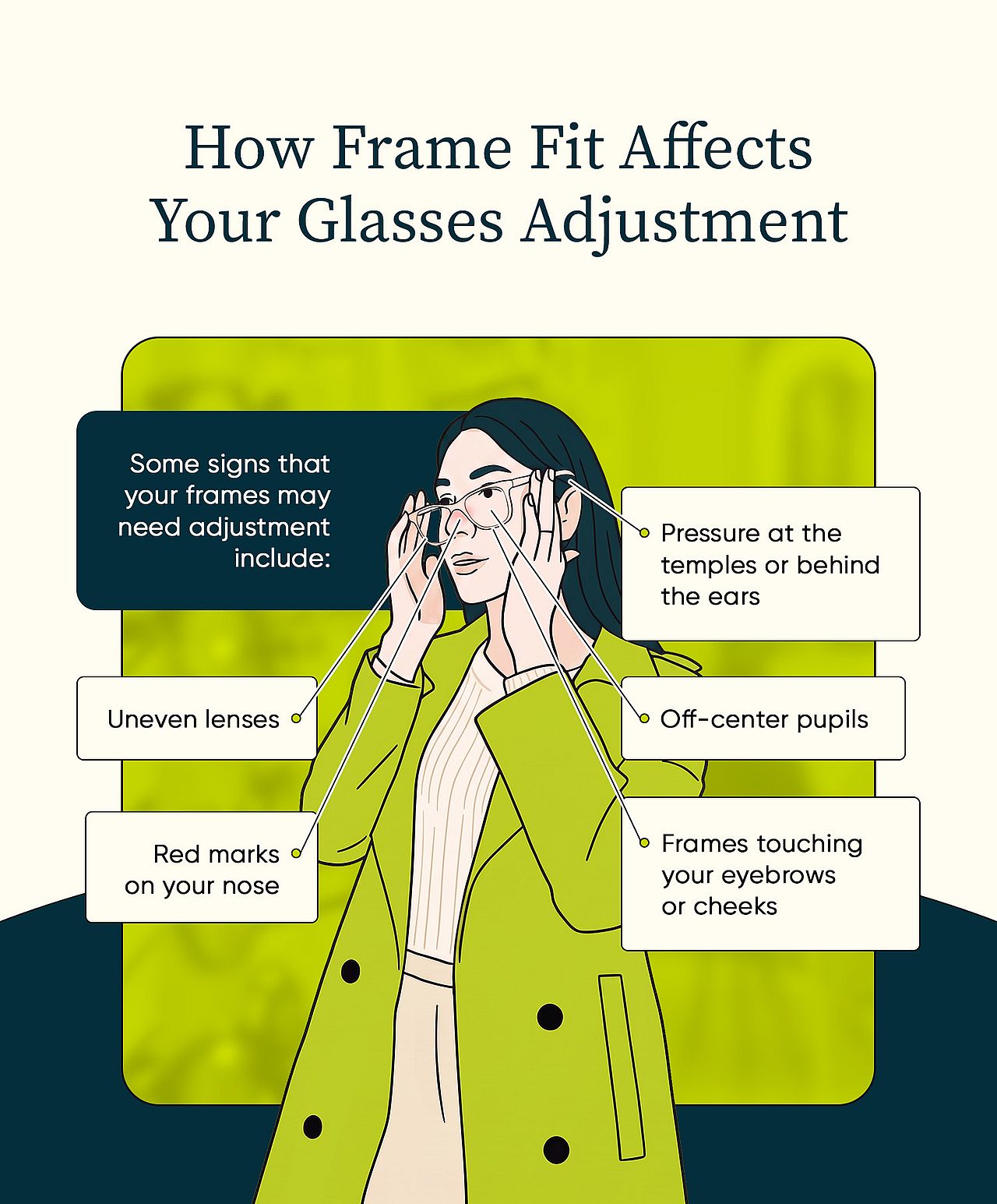
Fit issues tend to cause physical discomfort, while prescription adjustment symptoms are usually more visual. If your frames consistently feel uncomfortable or sit unevenly, return for a professional refit instead of bending them yourself.
Small professional adjustments can usually resolve most fit problems. Many frame adjustments only take a few minutes and often improve comfort without replacing your lenses.
Contact your eye care provider if your symptoms worsen or something clearly feels wrong with your new glasses. Watch for warning signs such as:
The discomfort you feel today will not last. Within a few weeks, your new glasses will feel like a natural part of how you see the world. You will move through your day without thinking about the frames on your face.
Depth perception settles, and headaches fade. This adjustment period is temporary, but the benefits are lasting. Clearer vision means you can read without straining, drive with confidence and see the details that matter most in your daily life. The learning curve may feel challenging now, but it leads to a more comfortable, capable way of navigating the world.
Give yourself time to adapt. Gradual improvement is usually a sign that your eyes and brain are adjusting successfully.
This story was produced by Eyemart Express and reviewed and distributed by Stacker.


