
FAIRHOPE — The story of three Baldwin County women who turned personal concern into an organized environmental movement reached local audiences this week as "Sallie's Ashes" made its regional …
This item is available in full to subscribers.
Please log in to continue |

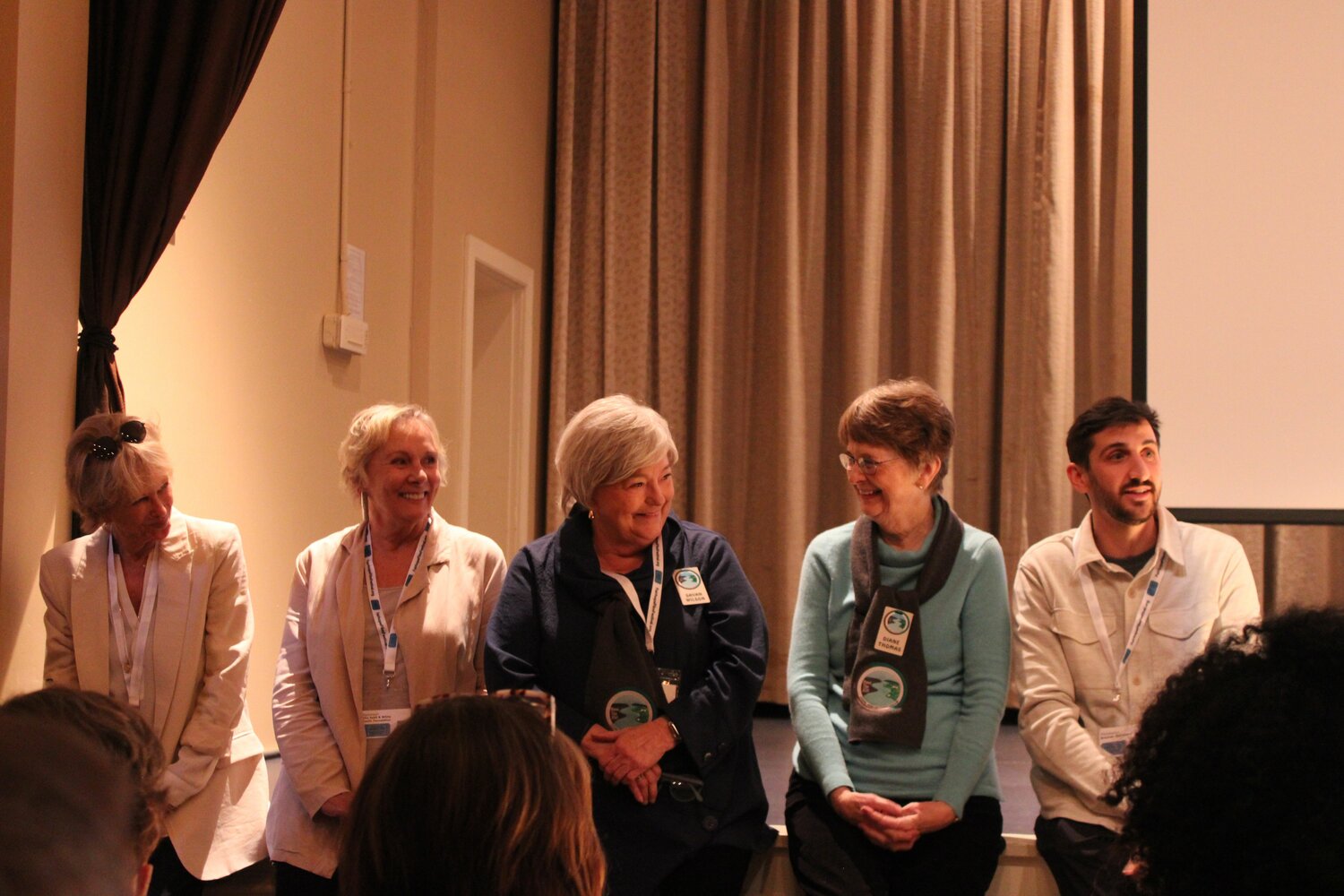


FAIRHOPE — The story of three Baldwin County women who turned personal concern into an organized environmental movement reached local audiences this week as "Sallie's Ashes" made its regional debut at the Fairhope Film Festival.
The 40-minute documentary, which premiered at the Telluride Film Festival in August, screened in Fairhope during the festival's opening-night cocktail event on Nov. 13, followed by a public showing on Nov. 16.
The film follows the origins of the Coal Ash Action Group, founded in 2022 by longtime Eastern Shore residents who set out to push for the removal of 21 million tons of coal-ash stored in an unlined pit at Alabama Power's Plant Barry, about 20 miles upstream from Mobile Bay.
Coal-ash is the gray, powdery waste left after coal is burned to produce electricity. Power plants often store this waste in large ponds, adding water to keep the ash from spreading, because it has historically been the cheapest and easiest way to manage it. However, according to the Environmental Protection Agency, unlined coal ash ponds like the one at Plant Barry can allow toxic metals to seep into groundwater and pose serious risks if containment walls fail or floods occur.
The story centers on the late Sallie Smith and the friends — Diane Thomas and Savan Wilson — she rallied in her final months of fighting terminal cancer to take on what they saw as a pressing environmental hazard.
Brennan Robideaux, a Louisiana filmmaker who directed the film that was produced by Oscar winner Daniel Junge and Allison Bohl Dehart, said telling the women's story carried a different kind of weight — one rooted in purpose, responsibility and admiration.
"I had the honor of meeting these three incredible women, and then from them meeting the even larger team that they were able to build and Mobile Baykeeper and all the people that have been fighting for their community for a long time," Robideaux said. "I think in Louisiana, we have our own issues. And it was just very inspiring for me to see people that toward the later half of their life are still willing to fight for something."
Robideaux said he was struck by the women's commitment to a cause for which results they may never personally see.
"There's that adage, you know, about the future — that a good society is shaped by those who are willing to plant trees under which shade they'll never sit," he said. "These women are the emblem of that because they know that even if they were successful, the results of their labor may not take place until after they're gone. Sallie Smith is the exact example of that."
What made the story work, he said, was the women themselves.
"What was so beautiful about these women is that they understood how to approach their neighbor and not make it a preaching talking-down-to, but rather a communication," Robideaux said. "I think from that, they were able to access people that normally wouldn't talk about something like this."
During a post-screening discussion, Wilson, one of the three featured women, encouraged the audience to take action beyond watching the film.
"We appreciate your applause, but what we really want is we want all of y'all to join your voice with ours and make it heard to Alabama Power that you need to move the ash," Wilson said.
A study released this fall and previously reported on by GCM found arsenic and cadmium levels in the Mobile River near Plant Barry that are comparable to — and in some cases higher than — those measured after the 2008 Kingston coal-ash spill in Tennessee, the largest industrial spill of its kind in U.S. history.
For residents who missed the festival screenings, Wilson noted that the effort continues.
"We have a website, MoveTheAsh.com," she said. "You can go to our website, and you can send a letter to Alabama Power telling them to move the coal-ash."
She added that the group will also be announcing additional showings of the film through their website as well.
"Sallie's Ashes" will continue to be promoted by the Coal Ash Action Group as it schedules additional opportunities for public viewing.
This year's Fairhope Film Festival featured more than 30 feature and short films, panels, community events and the Fairhope Filmmakers' 48-Hour Scramble, where participants had 48 hours earlier in November to write, film, edit and submit a 4- to 6-minute short film using assigned elements. Entries were judged then shown during the festival. Festival screening locations included Coastal Alabama Community College, Fairhope Public Library, USA, Eastern Shore Art Center, Ben Gall Theater, Fairhope Brewing Company, The Balcony and The Book Cellar.
Gabriella Chavez is a Report for America corps member who writes about growth and development in Baldwin County and our natural spaces for Gulf Coast Media. Your donation to match our RFA grant helps keep her writing stories like this one; please consider making a tax-deductible gift of any amount today by visiting https://tinyurl.com/yaf8yf5n.


