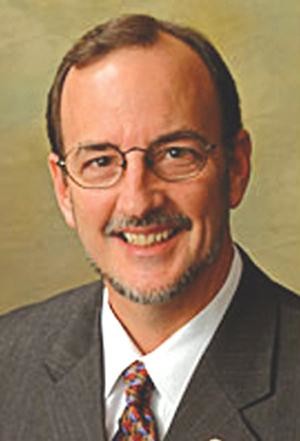
DAPHNE, Ala.—Alabama Reps. Randy Davis and Joe Faust discussed the impact of rising insurance premiums on Baldwin County residents at Thursday’s “Coffee with the Mayor” in council chambers at City Hall.
Faust said he’s met with the …
This item is available in full to subscribers.
Please log in to continue |
DAPHNE, Ala.—Alabama Reps. Randy Davis and Joe Faust discussed the impact of rising insurance premiums on Baldwin County residents at Thursday’s “Coffee with the Mayor” in council chambers at City Hall.
Faust said he’s met with the state insurance commissioner to talk about implementing a captive-insurance program. A captive-insurance company is a subsidiary of a parent insurance entity, formed to insure some of the parent’s risks. The captive company will buy reinsurance from the traditional insurance market. Captives can give consumers direct access to the reinsurance market and can limit fluctuating premium rates.
This alternative can be a means of bypassing insurance company overheads and expenses and can cut insurance rates by up to 40 percent, according to the Insurance Information Institute.
“We don’t know if it will work or not,” Faust said. “Reinsurers fund the premiums but they don’t want to take everybody. But if we can’t have everyone, we don’t want it.”
Davis said he hopes the state will end annual property reappraisals. The state, for a time, had adjusters assess properties every four years; now, properties are appraised each year.
Further, “most folks don’t realize that their homeowners’ insurance is taxed,” Davis said.
For those insured by an admitted company—one of the largest eight, such as Allstate or State Farm—tax is about 6 percent, he said, adding that non-admitted companies here tax 3.6 percent.
According to the Library of Congress, admitted insurance carriers are subject to laws and regulations of the state in which they operate. The state can intervene to help pay out admitted insurance claims—in the wake of a natural disaster, for example.
Non-admitted carriers are not filed with the state and, therefore, are not subject to the same laws and regulations the admitted insurers must follow. Typically, the state will not apply any financial assistance to non-admitted insurance policy holders.
A customer can choose between the flexibility of a non-admitted carrier or the stability of admitted insurers.
Davis cited the impact of natural disasters—such as Hurricanes Ivan and Katrina—as catalysts for rising premiums.
Davis also shared that Baldwin County is in better shape than some of its counterparts, like Birmingham, which is riddled with $3.2 billion in debt with its sewer system.
Davis said the state’s $2 billion general fund and $6.5 billion education fund will see some serious cutbacks this year.
“We’re looking at close to $1 billion in cuts to the education budget,” he said. “We don’t know how we’re going to do it.”
The national economic infrastructure stimulus package could help solve some of the state’s funding dilemmas, due to Alabama’s sales tax revenue decreasing 27 percent last year.
“We’re looking at $3 billion coming to Alabama,” Davis said.
The impact of the national economic downturn on the state and Baldwin County was also addressed at Thursday’s gathering.
“What you’re seeing in the economy is not just Alabama, it’s the entire U.S.,” Davis said. “I’m fearful that we’re just in the early stages of this trickle-down recession.”
“We understand what an economic stress this is to our state and our whole country,” Faust said. “Everyone knows that this economy is a ripple effect. If you’ve got a job, feel lucky.”
Faust said he’s concerned that people have lost 35 percent of their income but the prices of goods and cost of living continue to rise.
“We know things have been tough on you and things have been tough on us,” he said.