
A family fishing trip along a south Alabama river led to the discovery of a 32-million-year-old leatherback sea turtle fossil, one of the most complete and the first of its kind ever found.
The …
This item is available in full to subscribers.
Please log in to continue |


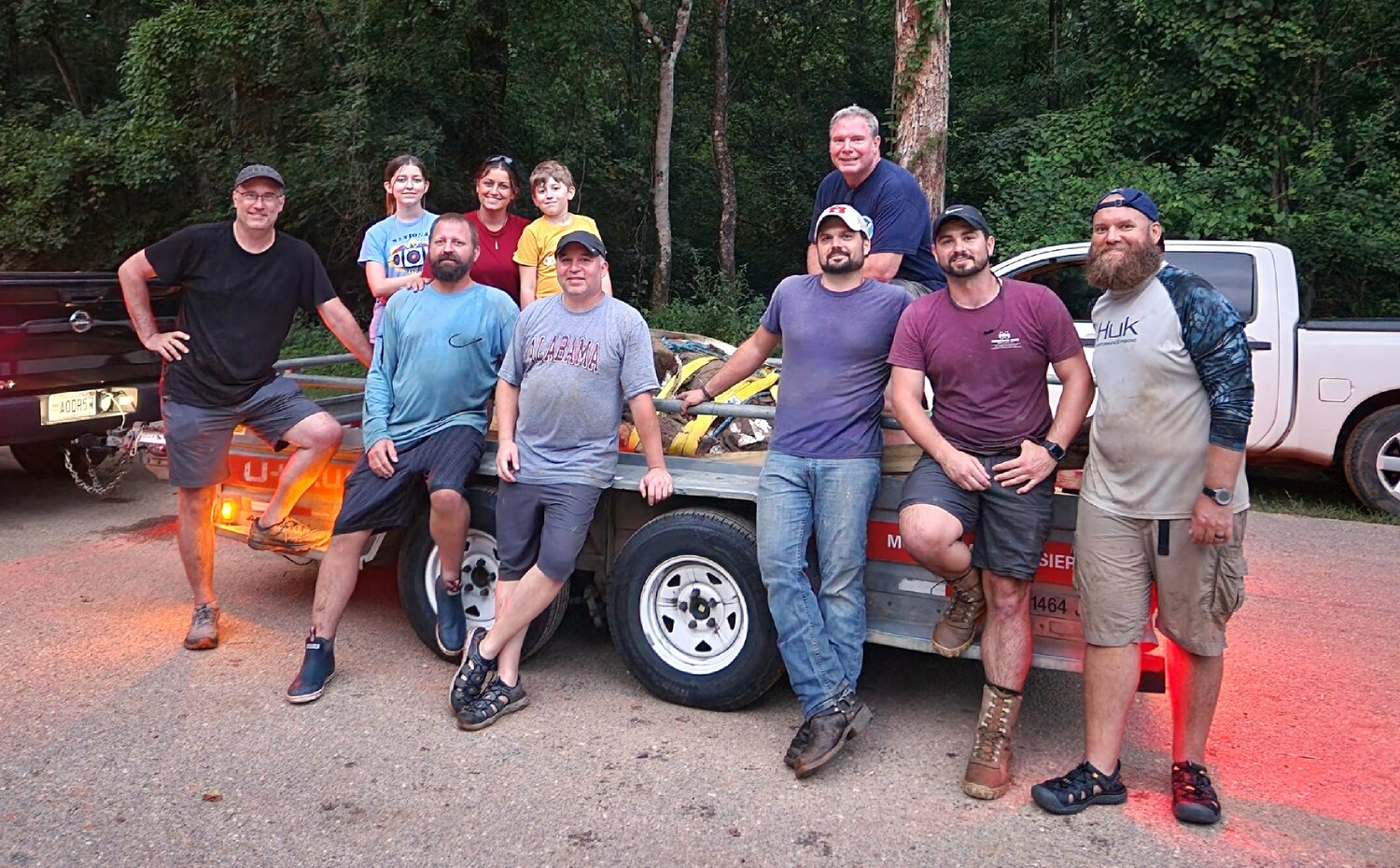


A family fishing trip along a south Alabama river led to the discovery of a 32-million-year-old leatherback sea turtle fossil, one of the most complete and the first of its kind ever found.
The shell, about 4 feet long and 3 feet across, represents a brand new subfamily and species of leatherback sea turtle.
Adam and Adrienne Coleman, along with their children, Talah and Corey, first spotted the fossil in 2021 while fishing near their home.
“My dad got me into collecting fossils when I was a kid,” Adam Coleman said. “Now we look for them every time we’re on the river.”
The family’s discovery was later confirmed by paleontologists after Adam reached out to Andrew Gentry, a researcher who specializes in Alabama’s fossil turtles.
“When I saw the fossil for the first time, it was hard to believe what I was seeing,” Gentry said. “It was absolutely breathtaking.”
Leatherback sea turtles are unique because their shells are made of tiny bones called ossicles, which usually scatter after death, making intact fossils extremely rare.
“This is truly a one-in-a-million fossil. Specimens like this one are why Alabama is quickly becoming a globally recognized hot-spot for fossil diversity,” said Jun Ebersole, director of collections at McWane Science Center in Birmingham.
The new species has been named Ueloca colemanorum. The genus name, Ueloca, comes from the Muscogee (Creek) language, meaning “water turtle.” The species name honors the Coleman family for their discovery and help with its recovery. The fossil is now on public display at McWane Science Center.
Gabriella Chavez is a Report for America corps member who writes about growth and development in Baldwin County and our natural spaces for Gulf Coast Media. Your donation to match our RFA grant helps keep her writing stories like this one; please consider making a tax-deductible gift of any amount today by visiting https://tinyurl.com/yaf8yf5n.


